
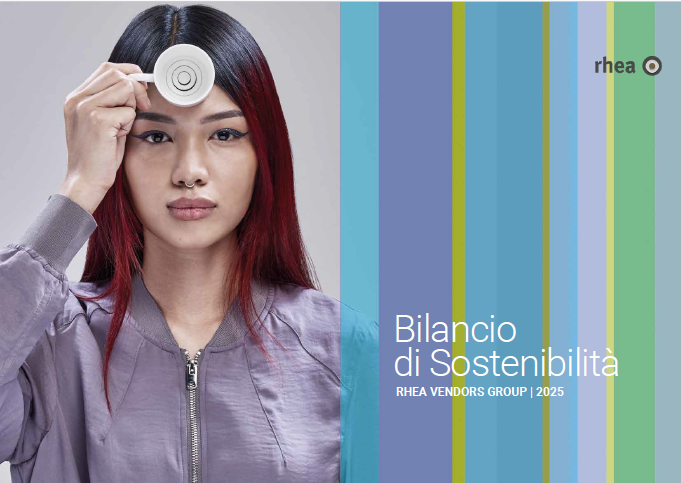
Automatic coffee machine specialist, Rhea, has published its 2025 Sustainability Report, the Group’s third, highlighting the progress made since 2023 towards embedding sustainability more deeply into its business practices and translating commitments into measurable actions and results.
In 2025, Rhea strengthened its approach to measuring and managing sustainability performance by introducing quantitative targets linked to its key environmental, social, and governance priorities. The Group also updated its Sustainability Plan, which now includes 57 initiatives. By the end of 2025, 44% of the planned initiatives had been completed and 35% were underway, compared with 5% and 28%, respectively, in 2023.
The Report also expands the Group’s reporting scope to include its subsidiaries in Mexico and Turkey in 2025 and adopts the amended European Sustainability Reporting Standards (ESRS), continuing its alignment with European reporting standards.
“For us, sustainability is not a goal separate from our business, but a way of looking at the choices we make and the value we can create over time. It means rethinking our products and processes, creating an environment where people can grow and contribute, and building responsible relationships with customers, partners, suppliers, and communities. The Sustainability Report helps us measure our progress while remaining transparent about what still needs to be done. With this awareness, we want to keep improving and playing our part,” says Andrea Pozzolini, chief executive of Rhea.
On the environmental front, 2025 marked the beginning of a structured process to develop a Decarbonisation Plan, expected to be formalised in 2026. The Group set its first quantitative targets for reducing Scope 1 and Scope 2 emissions, alongside measures to improve energy efficiency and the use of electricity from renewable sources at its production sites.
Environmental considerations are also reflected in the way Rhea conceives and designs its solutions. Modularity, the ability to replace and repair components, the use of recycled and recyclable materials, and product life cycle assessment are among the areas the company is working on.
People are an essential part of this approach. Rhea has 414 employees; 99% of employment contracts are permanent, and an average of 33.2 hours of training per employee was provided in 2025. These figures are accompanied by a broader commitment to gender equality, inclusion, workplace safety and professional development.
This commitment is reflected in the renewal of the UNI/PdR 125:2022 Gender Equality Certification, alongside initiatives promoting workplace safety and skills development. Rhea has also signed the Women’s Empowerment Principles (WEPs), promoted by UN Women and the UN Global Compact, reinforcing its commitment to gender equality and women’s empowerment.
The Group is also extending its sustainability efforts across its supply chain. In 2025, the company finalised its Supplier Code of Conduct and began integrating ESG criteria into supplier assessments, with the aim of strengthening relationships built on responsibility and transparency.
A dedicated governance structure supports the continuity of this work. Established in 2024, the ESG Committee monitors progress on initiatives and results, while the Sustainability Plan is validated by the Board of Directors, which also approved the introduction of new quantitative targets in 2025.
Progress is also reflected in independent assessments. The ESG rating awarded by Cerved Rating Agency places the Group above the manufacturing sector average, particularly in the environmental and social performance. In 2026, Rhea also received the EcoVadis Bronze Medal, following an assessment of its performance across four areas: environment, labour and human rights, ethics, and sustainable procurement.
“Sustainability is a journey we build day by day, and it involves all of us. Over the years, we have learned to better understand our impacts, measure what we do and set increasingly clear goals. The results achieved encourage us to move forward, knowing that there is still much to be done. I believe the value of this process lies in continuing to challenge ourselves, learn and improve, while increasingly involving our people and those who work alongside us.”, adds Stefano Macchi, Board Member responsible for Sustainability.
Looking ahead, the Report outlines the next steps, including the formalisation of the Decarbonisation Plan, further strengthening of ESG assessments across the supply chain, an assessment of the workplace climate and the implementation of the Organisation, Management and Control Model pursuant to Italian Legislative Decree 231/2001.